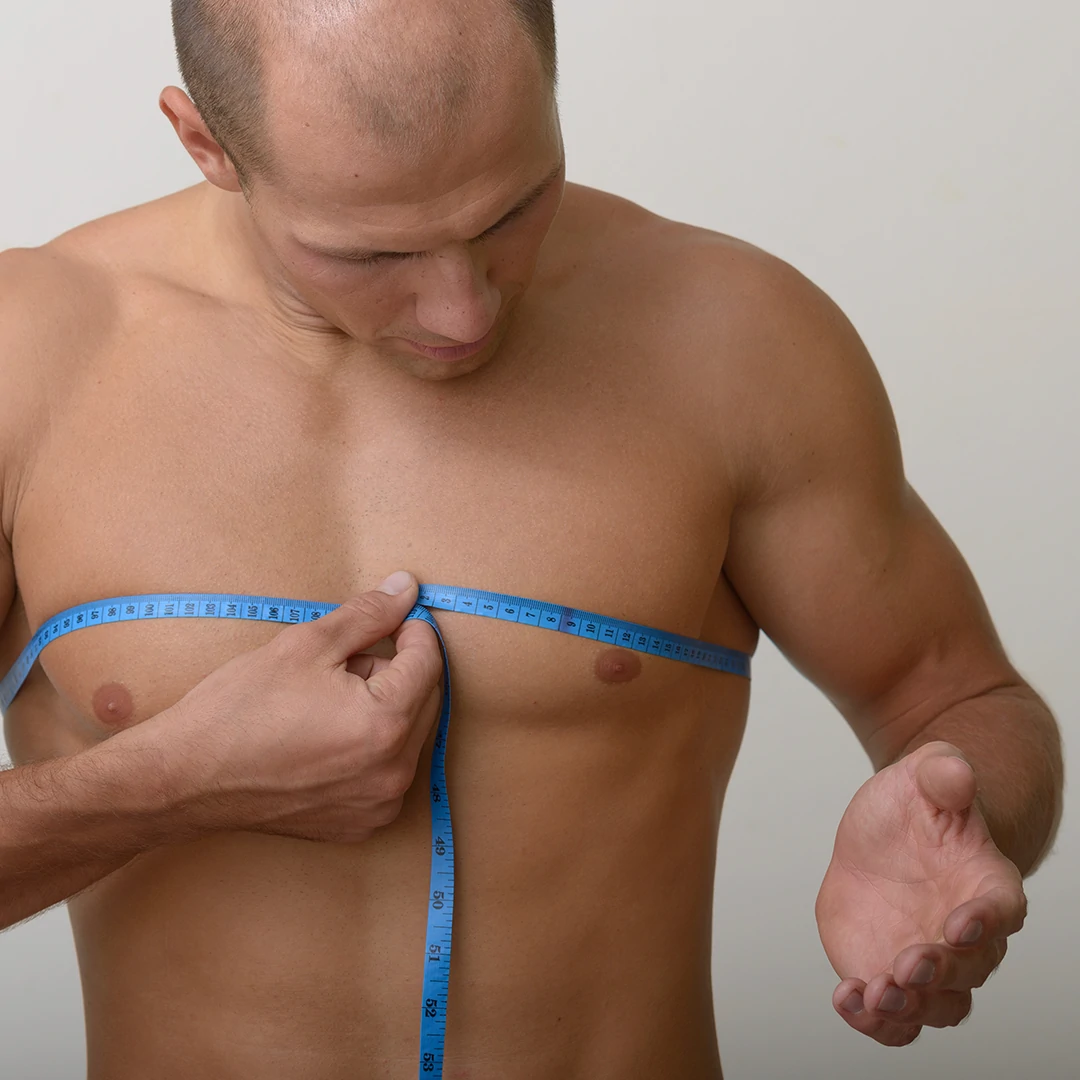
Gynecomastia is a condition in which the breast grows abnormally in men. Normally, breast tissue is expected to be not prominent in men, but factors such as hormonal changes, weight gain or drug use can lead to breast enlargement. This is not only a physical problem, but can also cause serious aesthetic concerns and self-confidence problems for men.
Gynecomastia is the enlargement of the breasts in men in a way that negatively affects the aesthetic appearance. This condition usually occurs as a result of hormonal imbalances, fat accumulation due to excess weight, or side effects of certain medications. This breast enlargement, which disrupts the male pattern body line, can cause the person to feel uncomfortable and experience restrictions in their social life. For example, behaviors such as avoiding playing sports or wearing tight clothes can be observed. The use of drugs that affect hormones, such as steroids, can also pave the way for the development of gynecomastia in the post-adolescent period.
Breast enlargement in men is called gynecomastia in the medical literature. The underlying causes of this condition may vary from person to person and differ according to the type of gynecomastia. Hormonal fluctuations experienced during puberty can cause temporary gynecomastia in young men. Surprisingly, gynecomastia can also be seen in infancy; This is usually due to high estrogen levels passed through the mother or hormonal influences during breastfeeding. In addition, excessive weight gain and related increase in adipose tissue are also important factors leading to gynecomastia.
Gynecomastia surgery is an ideal solution for male patients who are uncomfortable with their breast size and want to get rid of this aesthetic problem permanently. In particular, if breast size negatively affects the general appearance of the person, distorts body perception and becomes a serious source of discomfort in daily life, surgical intervention can be evaluated. Who is suitable for the surgery will be explained under the headings of more detailed candidate criteria and unsuitable situations.
Men who want to benefit from gynecomastia correction surgery are expected to meet certain conditions. Generally , being over the age of 18 is an important criterion for surgery. This age limit is based on both legal age and completion of body development. However, in exceptional cases and with the approval of a specialist physician and parents, surgical intervention can also be performed on patients older than 15-16 years of age. Other important criteria sought for surgery are that the patient’s general health condition is good and skin elasticity is suitable for achieving successful results.
Although breast reduction surgery offers significant benefits for men, surgical intervention may not be considered appropriate in some conditions. Most plastic surgeons do not recommend surgery to patients under the age of 18 on the grounds that temporary breast growth seen during puberty may regress spontaneously and body development has not yet been completed. However, in obvious and persistent cases, this age criterion can be relaxed. Underlying health problems that lead to hormonal imbalances or the presence of masses in the breast that are not certain whether they are benign or not are also conditions that cause gynecomastia surgery to be postponed or other treatments to be prioritized.

There are different treatment approaches to solve the problem of gynecomastia. These methods include liposuction (fat removal), direct surgical intervention, healthy weight loss or hormonal treatments. However, due to the fact that breast enlargement in men is usually not completely eliminated by diet and exercise, the most effective treatment methods are usually considered liposuction and surgical excision. These surgical methods offer both safe and permanent results when applied by plastic surgeons.
Liposuction is an effective treatment method, especially in cases of breast enlargement due to excessive adipose tissue accumulation. In this procedure, thin cannulas (pipes) are inserted through small incisions made in the breast area and excess fat tissue is removed from the body with the help of vacuum. Liposuction is a less invasive method and has the advantage of leaving minimal scarring. It is generally preferred in gynecomastia types where adipose tissue, not breast tissue, is dominant.
Surgical excision is the method that provides the most precise and permanent results in the treatment of gynecomastia. This method is especially used in cases where breast enlargement is caused by excess glandular (glandular) tissue rather than excess fat, or when there is too much skin sagging to be removed by liposuction. With surgical excision, excess mammary gland tissue and, when necessary, excess sagging skin are directly removed. This method is the most suitable option for creating a flat and natural male chest contour in patients with more pronounced breast growth or a predominant fibroglandular structure.
The advantages offered by gynecomastia operation are quite wide. To understand the benefits of this surgery, it is necessary to consider the negative effects of breast enlargement in men. Gynecomastia can negatively affect individuals’ aesthetic perception and self-confidence. Gynecomastia surgery provides a permanent and significant effect that cannot be achieved through methods such as diet or exercise. In this way, many positive results occur, from improvement in the aesthetic appearance of the person to physical relaxation.
Breast reduction surgery plays a critical role in correcting body image and increasing self-confidence for male individuals . This operation can make a big difference, especially for men who feel uncomfortable due to their breast size, who are afraid to wear tight clothes, or who feel insecure in social situations. The flat, masculine and ideal male breast image obtained after gynecomastia reinforces the person’s self-belief and provides a great psychological relief.
Although many people think that gynecomastia is only an aesthetic problem, this condition also has physical ailments and clothing restrictions. Large breast tissue can cause physical pain, tenderness, or discomfort when playing sports in some men. They may also be hesitant to wear tight clothes or avoid certain activities because of the appearance of their breasts. With gynecomastia surgery, individuals get rid of these physical and mental restrictions and can dress and move as they wish. In this way, there is a significant increase in comfort both physically and psychologically.
As with any surgical procedure, there are important points to be considered after gynecomastia surgery. It is vital to meticulously follow the recommendations of the physician during the recovery process after gynecomastia surgery to minimize the risk of complications and achieve the best result. Otherwise, delays in recovery or undesirable consequences may be encountered. Things to consider during the healing process will be discussed in more detail under the following subheadings.
After gynecomastia surgery, regular care of the surgical site is essential for a smooth recovery . Generally, patients are discharged on the day of surgery or may need to stay in the hospital overnight. During your stay in the hospital, your dressings and basic care are done by medical personnel. In the post-discharge period, using the gynecomastia corset regularly, taking the prescribed medications regularly, protecting the surgical site from impacts and avoiding heavy physical activities in the first days accelerate recovery. It is generally recommended to continue the use of compression corsets for 4-6 weeks. The full recovery process can take 6 to 12 months, although it varies from person to person.
After gynecomastia surgery, vague scars may remain around the breast and especially on the nipple . In order to reduce the visibility of these scars, it is important to protect from the sun and to use regular scar removal creams or gels recommended by the physician in the first months. Usually, these scars fade over time and become less noticeable. If the scars continue to be uncomfortable, scar reduction methods such as laser treatment can be used in consultation with your doctor.
The diagnosis of gynecomastia is made by a specialist in plastic, reconstructive and aesthetic surgery. The specialist physician evaluates breast enlargement by methods such as physical examination, observation and palpation. In some cases, patients may also be referred to an endocrinologist and metabolic disease specialist in order to detect an underlying hormonal imbalance or other health problem. This multidisciplinary approach helps to determine the cause of gynecomastia and create the most appropriate treatment plan.
It is recommended to wait at least 3 to 4 weeks to start exercising after gynecomastia surgery . Intense exercises such as weight lifting, which directly affect the chest area, should definitely be avoided during this time. This period is important in order not to damage the sutures in the sensitive area after the surgery and not to disrupt the healing. The general health condition of the patient or possible complications may prolong the time to start doing sports. For this reason, you must get approval from the physician who performed your surgery before returning to physical activities.
The occurrence of breast growth after gynecomastia surgery may vary depending on some conditions. Since excess fat, mammary gland and skin tissue are removed by surgery, permanent and satisfactory results are usually obtained. However, in exceptional cases, such as the patient gaining excess weight after surgery or having a serious health problem that will disrupt the hormone balance, breast growth may occur again. For this reason, it is important to maintain a healthy lifestyle after surgery and not to disrupt regular doctor check-ups in terms of the permanence of the result obtained.
The use of bras after gynecomastia surgery is out of the question for men. However, the use of compression corsets in the postoperative period is necessary and important. This corset, which will be recommended by your plastic surgeon, helps to reduce edema (swelling), adapt the skin to the new contour and make the healing process faster and more comfortable by applying continuous pressure to the surgical area. Generally, the duration of corset use is around 1 month on average, but this period can be shortened or extended by your doctor depending on your individual recovery speed.

Yakuplu, Hürriyet Blv. Skyport Residance
Kat: 20 D: 173
Beylikdüzü/İstanbul
We believe that beauty is a unique and personal reflection of each person. Our task is to reveal this reflection not through a mere change, but through a profound transformation. Our most important principles on this path are precision and care.
Copyright © All Rights Reserved.
Designed by AS Medya
Fill out the form below and we will contact you shortly.


