
Today, many men face the problem of hair loss from a very young age, such as the early 20s. In addition, although it is not well known, it is possible for women to experience excessive hair loss and baldness. One of the most effective solutions to the problem of baldness in both men and women is hair transplantation. If hair transplantation is performed by plastic surgeons specialized in this field , it is ensured that the individual has hair that he can use permanently.
Hair transplantation is a procedure performed by hair follicle transfer. For hair transplantation, hair grafts are taken from an area where the individual does not have baldness problems from his head or from various areas such as his beard, depending on the situation. This graft contains skin tissue and hair follicles. The hair graft, which consists of skin tissue and hair follicles, is taken with great care and will provide a natural hair appearance, is transplanted to the areas where baldness is experienced. Thanks to this transplant, the process of increasing hair density in the area is performed.
Hair transplant surgery is the removal of hair follicles as graft tissue by various surgical methods. During this procedure, the number of grafts is determined according to the patient’s wishes and the hair gap closure process he needs. The graft tissue taken by calculating the number of grafts in accordance with the person is transferred to the balding skin with various surgical techniques. A choice is made between application methods such as FUE hair transplantation and DHI hair transplantation in accordance with the person.
Hair transplantation is a surgical intervention that can be suitable for many people. Many people struggle with baldness due to genetic factors, stress, hormone problems or traumatic accidents. The most effective and definitive method that can be used to increase hair density is hair follicle transfer, that is, hair transplantation, which is performed surgically. Therefore, both women and men can benefit from hair transplantation if they have baldness problems or need hair restoration due to partial hair thinning. Women’s hair transplantation and men’s hair transplantation are performed using the same or different techniques depending on the situation.
There are some candidate criteria for hair transplantation. Hair transplant candidate criteria can be explained in a few items.
There are a few situations where hair transplant surgery is not suitable. The first situation where hair transplantation is not suitable is that the individual does not have enough hair grafts. Not having enough hair grafts means that hair follicle transfer cannot be performed. In addition, in order for the individual to benefit from hair opening closure procedures, the hair loss problem must not continue actively and intensively. In individuals with active hair loss problems, hair transplantation may be unwarranted and ineffective because it is possible for the transplanted hair to fall out again. Therefore, one of the most important situations in which hair transplant surgery is not suitable is that hair loss continues actively and rapidly.
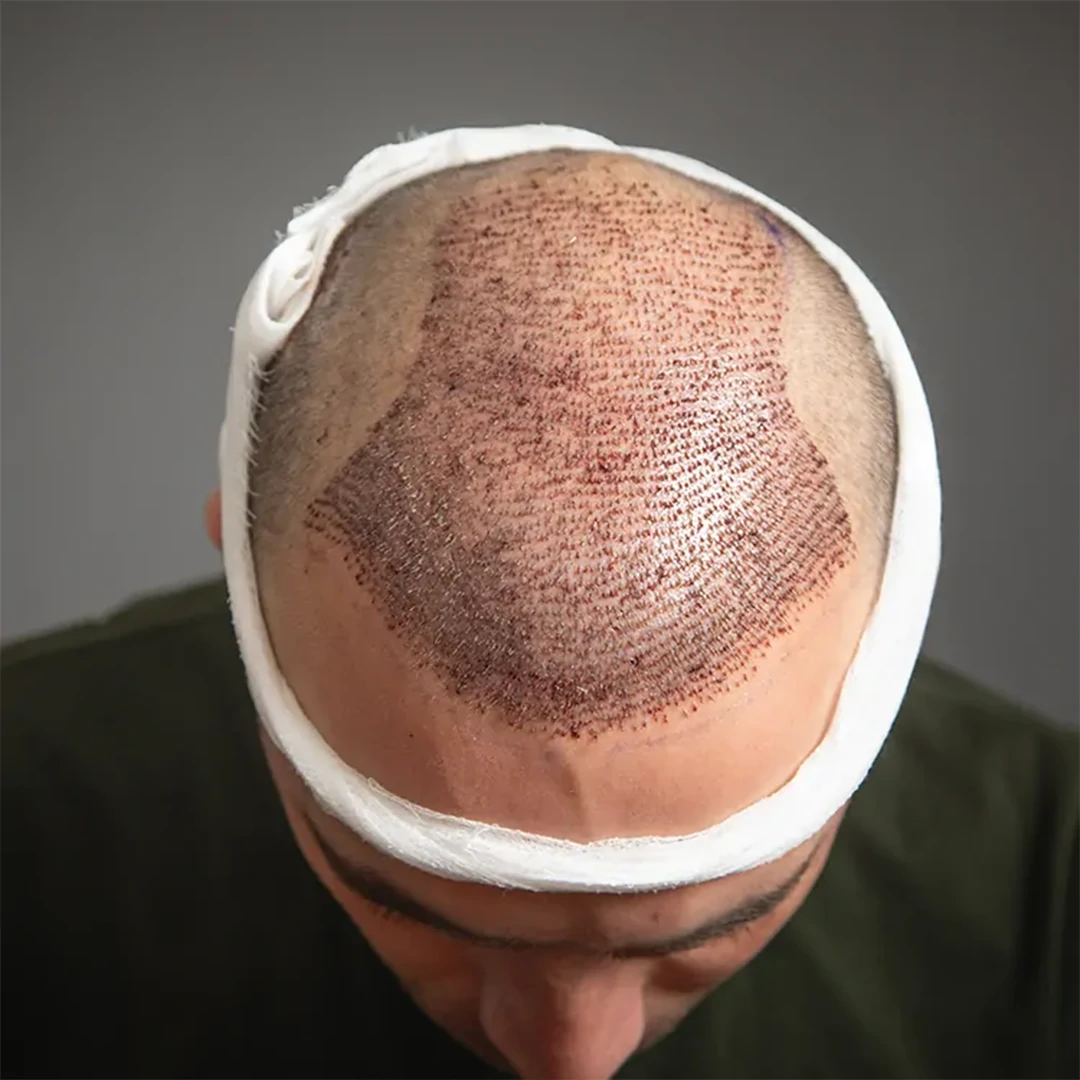
There are multiple hair transplantation methods that can be used to increase hair density. These methods include Follicular Unit Transplantation, Direct Hair Implantation, Fulicular Unit Extraction, and robotic hair transplantation. Among these methods, the two most preferred and highly effective methods are Fulicular Unit Extraction and Direct Hair Implantation methods. These methods are known as FUE and DHI with their abbreviation names. The most commonly used methods that are very effective in closing hair gaps can be explained under a few headings.
FUE hair transplantation is a very effective and innovative method. In this method, a large number of grafts can be transplanted. Therefore, FUE hair transplantation is the ideal method for people who have an intense baldness, not a partial one. With the FUE method, which allows transplantation with local anesthesia, it becomes possible for individuals with very intense baldness problems to achieve a lush and natural hair appearance.
In the DHI or Direct Hair Implantation method, as can be understood from the name of the method, direct hair transplantation is performed. A choi implanter pen, which is a medical material with a special tip, is used for transplantation with DHI hair transplantation. Thanks to this pen, it becomes possible to perform hair transplantation directly without the need to open channels to the hair follicles.
Hair transplant surgery has many different advantages. The problem of baldness or partial thinning of the hair negatively affects individuals aesthetically and psychologically. Individuals who have baldness problems at a very young age, especially in their early 20s, may suffer from many different problems such as hiding their scalp, complaining about an old appearance and deterioration of their general aesthetic appearance. Actions such as resorting to herbal methods may be insufficient to eliminate these problems. With hair transplantation, it becomes possible for the individual to gain various advantages by having an aesthetic, lush and natural hair appearance.
One of the most advantageous results of hair transplantation is that it offers a permanent and natural hair appearance . It is very difficult to achieve a natural appearance and provide permanence in various methods used for baldness, such as hair prosthesis. However, in hair transplantation techniques such as DHI and FUE, a natural and permanent hair appearance is obtained. Especially as a result of hair transplantation applications performed at the ideal time and under the right conditions, it may be possible for the individual to have hair that he can use for a lifetime.
One of the most beneficial results of hair transplantation is the improvement of the aesthetic appearance of the individual. Conditions such as baldness or very sparse hair can disrupt the aesthetic appearance of individuals and cause them to feel bad. There may even be absurd situations such as the individual looking 15-20 years older than he is due to baldness that occurs at an early age, especially in men. With the aesthetic appearance obtained with hair transplantation, the individual begins to feel better and can become much more self-confident.
The recovery process after hair transplant surgery affects many conditions, from how effective results will be obtained from hair transplantation to the possibility of allergic reactions. Therefore, during the healing process, it is necessary to protect the head area in line with the doctor’s recommendations, to use the necessary products and to stay away from harmful external factors such as sun rays as much as possible. What needs to be done during the recovery process after hair transplant surgery and those who are curious about the process can be explained under several headings.
Things to consider within the scope of post-transplant care recommendations are as follows:
In order to reduce scars after hair transplantation, it is necessary to pay attention to hygiene and choose the right method. For example, the FUT technique can leave more significant scars than hair transplantation methods such as DHI and FUE. However, in methods such as DHI and FUE, the probability of scarring is low and the remaining scar will be quite vague.
When the transplanted hair will start to grow after hair transplantation depends on more than one factor. In order for the transplanted hair to grow after hair transplantation, the shock loss must be overcome. Shock shedding generally occurs within 2-3 weeks after hair transplantation. Within weeks after shock shedding, that is, within a few months after hair transplantation, the transplanted hair begins to grow. The clearest and most permanent results of hair transplantation begin to be obtained from the 6th or 7th month after transplantation.
Shock shedding after hair transplantation is quite normal. Many people who have hair transplantation notice that the transplanted hair falls out within a few weeks after the transplantation process and think that the transplantation does not work. However, this idea does not actually reflect the truth and is a big mistake. Shock shedding after hair transplantation occurs due to the process of adaptation of the transplanted hair follicles to the tissue and is quite normal. Shock shedding after hair transplantation is usually experienced within a few weeks after the procedure and is temporary.
The legal age limit for hair transplantation is set at 18. However, in line with extreme situations such as traumatic accidents and factors such as balding of the individual, hair transplantation can also be performed on individuals under the age of 18 with the approval of a plastic surgeon. In addition, according to many plastic surgeons, transplantation in your 10s or early 20s can affect the permanence of the results. For this reason, many plastic surgeons recommend that hair transplantation be performed after the age of 25-30 and when there is no active shedding.
The donor area to be determined for hair transplantation may vary depending on the situation. The areas used as hair transplant donor areas are usually behind the ears and the nape of the neck. These two regions are the regions where even individuals with baldness problems can have hair and are suitable for transplanting hair follicles. In addition, as a result of the absence of any in the head, nape and behind the ears of the individual, different areas of the body can also be used as donor areas. There is a possibility of scarring in the donor area used for hair transplantation, but this scar is usually very minimal and uncomfortable.
It is necessary to be very careful about washing after hair transplantation. The first wash after hair transplantation should be done 2-3 days after the application. In the first wash after hair transplantation, products suitable for the healing process after hair transplantation, such as shampoo or solution recommended by a plastic surgeon, should be used. In addition, it is necessary to exhibit very slow and soft movements in order not to damage the donor area or the area where hair transplantation is performed during washing. After the first wash after hair transplantation, the hair should be washed at least 3-4 times a week.
Whether the hair will look natural after hair transplantation depends on more than one factor. The most important factor for hair transplantation to lead to a natural hair appearance is the experience and decisions of the plastic surgeon. Plastic surgeons who specialize in hair transplantation can create an aesthetic hair appearance that will look just like the individual’s own innate hair by applying methods such as hairline design and making a very careful planning. However, after a hair transplant procedure that is not performed under the right conditions, the hair may have an unnatural and unaesthetic appearance.

Yakuplu, Hürriyet Blv. Skyport Residance
Kat: 20 D: 173
Beylikdüzü/İstanbul
We believe that beauty is a unique and personal reflection of each person. Our task is to reveal this reflection not through a mere change, but through a profound transformation. Our most important principles on this path are precision and care.
Copyright © All Rights Reserved.
Designed by AS Medya
Fill out the form below and we will contact you shortly.


